

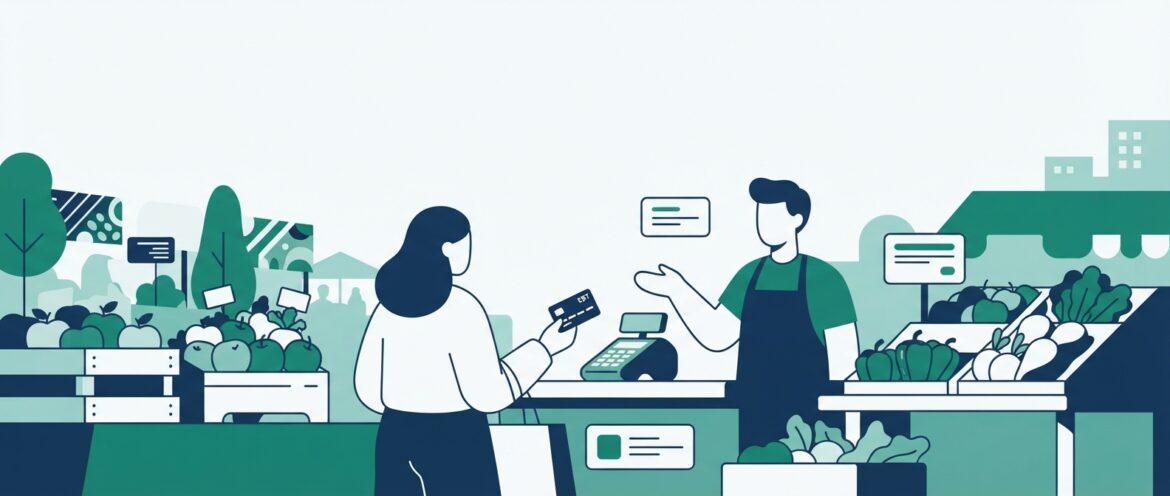
What Double Up Food Bucks and similar produce incentive programs are
If you use SNAP (Supplemental Nutrition Assistance Program) benefits, you may have heard about a bonus that some farmers markets and even a few grocery stores offer: spend your SNAP dollars on fruits and vegetables, and the program matches what you spend with extra money to buy more fresh produce. Double Up Food Bucks is one of the best-known versions of this idea, but it’s part of a broader category often called “produce incentive programs” or “healthy food incentives.”
The concept is simple. These programs are designed to make fresh fruits and vegetables more affordable for households on limited incomes, while also supporting local farmers and small food businesses. Instead of your SNAP dollars stretching only as far as their face value, a matching program effectively doubles your buying power for produce, up to a set limit that varies by market or state.
These programs are usually run by nonprofit organizations, farmers market associations, or public health groups, often with support from state agriculture departments, food banks, or federal grant funding. Because funding and rules come from many different sources, the details can look a little different depending on where you live, but the core idea stays the same: use SNAP, get more produce for your money.
How the matching process works at the register or market booth
At most farmers markets that participate, you won’t swipe your SNAP EBT card at each individual vendor’s stand. Instead, there’s usually a central market booth, sometimes called an information tent or SNAP/EBT booth, where the transaction happens.
Here’s the general flow:
You bring your EBT card to the market booth and tell the staff how much you’d like to spend. They run your card for that amount using a card reader, similar to a debit card machine. In exchange, you receive tokens, coupons, or vouchers equal to the amount charged. These are sometimes wooden or paper tokens, sometimes printed vouchers, and they work like cash at vendor booths throughout the market.
If the market offers a matching incentive, the booth staff will also hand you separate incentive tokens or vouchers, often in a different color or clearly marked for fruits and vegetables only. For example, if you request an amount in SNAP benefits, you might receive an equal amount in matching tokens, up to that market’s daily or per-visit limit. The regular tokens can typically be spent on any SNAP-eligible food sold at the market, while the matching tokens are usually restricted to fresh fruits and vegetables.
You then shop around the market, handing vendors tokens instead of cash or a card. At the end of the day, vendors turn their collected tokens back in to the market organizers to be reimbursed, so the system works smoothly for everyone involved.
Because matching amounts and rules are set locally, it’s worth asking the market staff directly what the current match rate and daily limit are before you start shopping, so you know how far your benefits will go that day.
Which states and markets currently participate
Produce incentive programs, including Double Up Food Bucks, have spread to a wide range of states over the past several years, and new markets join these networks regularly. Participation is not universal, though. Whether a program exists near you, and how generous the match is, depends on local funding, farmers market partnerships, and state-level support.
Because these details change from season to season and city to city, the most reliable way to find out what’s available where you live is to check directly rather than rely on secondhand information. A few good starting points:
Look up the Double Up Food Bucks national network online, which maintains information about which states and regions currently participate. You can also ask your state’s SNAP or Department of Human Services office, since many keep lists of participating farmers markets. Local farmers markets themselves often post signage or website information about whether they accept SNAP and whether they offer any kind of matching bonus. Some public health departments, food banks, and agricultural extension offices also maintain updated market directories.
If your area doesn’t currently have a matching program, it doesn’t necessarily mean you can’t use SNAP at farmers markets at all. Many markets accept EBT cards even without an incentive match, so it’s worth asking even if doubling isn’t available.
Steps to using your SNAP EBT card at a farmers market
If you haven’t used your EBT card at a farmers market before, the process is more approachable than it might seem. Here’s a general walkthrough:
First, find out if the market accepts SNAP. Look for signage near the entrance, check the market’s website, or call ahead. Most markets that accept SNAP will also mention whether they offer a matching incentive program.
Second, locate the market’s information booth or EBT booth when you arrive. This is usually a single table or tent, separate from the vendor stalls, where all EBT transactions happen.
Third, tell the staff how much you’d like to load onto tokens or vouchers. They’ll ask for your EBT card and PIN, just as you would use at a grocery store, and run the transaction on a card reader.
Fourth, collect your tokens. If a matching program is active, you’ll receive both your regular SNAP-value tokens and separate matching tokens for produce. Ask the staff to explain any differences between the two if it’s not clear, since rules about what each token type can buy do vary.
Fifth, shop the market as you normally would, using tokens instead of cash at each vendor. Vendors will usually have small signs indicating they accept SNAP or market tokens.
Finally, keep in mind that any unused SNAP-value tokens generally can’t be redeemed for cash and often aren’t valid at other markets, so it can help to think through roughly how much you want to spend before your card is charged. Matching tokens, since they were given to you for free as part of the incentive, are worth using during that same market visit when possible, since return or refund policies vary by market.
Other healthy-food incentive programs worth knowing about
Double Up Food Bucks is widely recognized, but it isn’t the only program working to make healthy food more affordable for SNAP households. Depending on where you live, you might come across other incentive programs with different names but a similar mission.
Some grocery store chains partner with state or nonprofit programs to offer point-of-sale discounts on produce for SNAP shoppers, without requiring a separate token system. Others are tied to mobile produce markets or community-supported agriculture (CSA) box programs that offer reduced-price shares to SNAP participants. There are also programs aimed specifically at pregnant women, new parents, and young children that work alongside WIC (Women, Infants, and Children) benefits to encourage fruit and vegetable purchases.
Because funding for these programs often comes through grants and public health initiatives, availability can shift from year to year. If a program you relied on isn’t running one season, it’s worth checking again later, since many are renewed or replaced with similar efforts.
If you’re not sure where to start, your state’s SNAP office, a local food bank, or a community health center can usually point you toward current incentive programs in your area. Farmers market managers are often happy to explain their specific rules too, since they want SNAP shoppers to feel comfortable using the benefit. Taking a few minutes to ask before you shop can help you get the most value out of your SNAP dollars, especially when a matching program is available to stretch them further.