

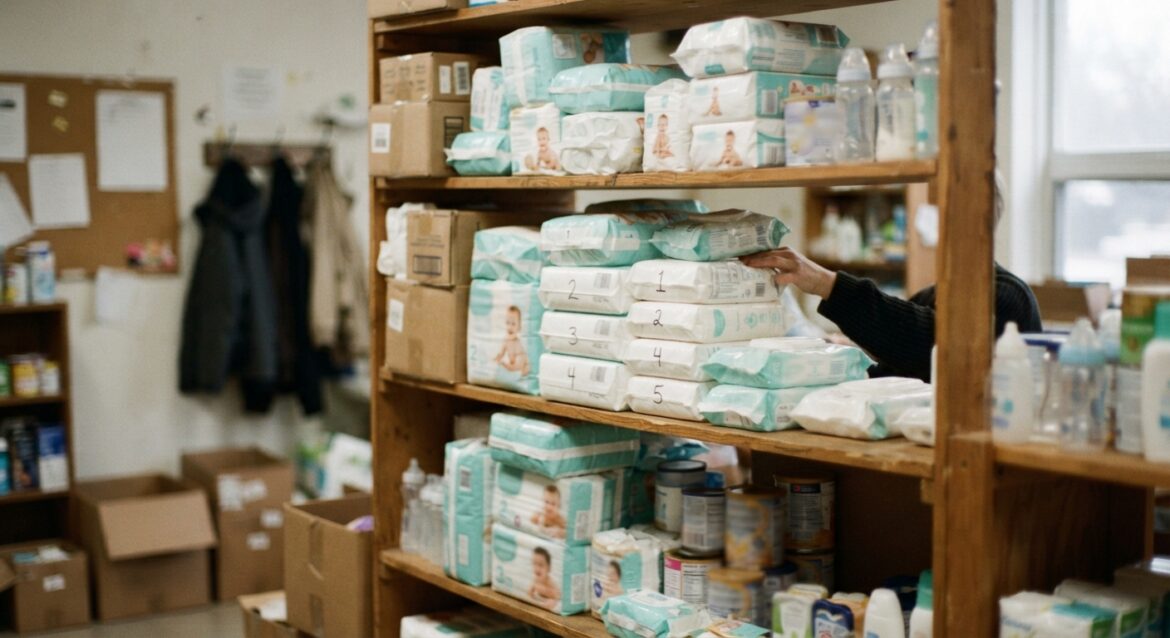
If you’ve ever stood in a store aisle doing mental math about whether to buy diapers or groceries this week, you’re far from alone. Diapers are one of the most requested items at food pantries and family resource centers across the country, yet they’re not covered by the two biggest food assistance programs most people rely on. Understanding why can help you figure out where else to turn.
Why diapers and some baby supplies fall outside SNAP and WIC coverage
SNAP, the Supplemental Nutrition Assistance Program, is designed specifically for food. The rules that govern it define eligible purchases as items meant for human consumption, plus a narrow set of exceptions like seeds and plants for growing food. Diapers, wipes, formula bottles’ nipples, and similar baby gear don’t meet that definition, so SNAP benefits can’t be used to buy them, no matter how tight your budget is.
WIC, the Special Supplemental Nutrition Program for Women, Infants, and Children, is a little different. WIC does cover infant formula for babies who aren’t fully breastfed, along with specific foods for pregnant, postpartum, and breastfeeding parents and young children. But WIC’s formula benefit is tied to particular approved brands and container sizes, and it doesn’t cover diapers, wipes, diaper cream, or other hygiene basics at all. Even families who qualify for and use WIC often find themselves needing formula amounts or brands that fall outside what their benefit provides, or needing diapers that WIC was never designed to supply.
This gap isn’t a technical oversight, it’s simply how these programs were built. SNAP addresses nutrition broadly, and WIC addresses nutrition specifically for young children and new parents. Neither was designed as a general household supply program. That leaves diapers, wipes, formula shortfalls, and baby gear like car seats or cribs as expenses families have to cover through other means, which is exactly the space that diaper banks and community organizations have grown to fill.
How local diaper banks and community organizations fill the gap
A diaper bank works much like a food bank, except the inventory is diapers, wipes, and sometimes formula, period products, or adult incontinence supplies. Diaper banks typically don’t hand items directly to families themselves. Instead, they distribute large quantities to a network of partner organizations, things like churches, community action agencies, family resource centers, health clinics, and shelters, who then give diapers and supplies directly to families who ask.
This two-step model means the fastest way to get help is usually not to search for “diaper bank” and show up at a warehouse, but to find the local partner site nearest you and visit during their distribution hours. Many communities have a diaper bank network associated with a national umbrella organization, but the day-to-day help comes from a local church basement, a nonprofit’s front desk, or a health department office.
Because diaper need is so widespread and so rarely talked about, many of these programs operate with a philosophy of minimal barriers. The people running them understand that a parent who’s short on diapers this week might not be short next week, and that needing help doesn’t require a permanent crisis, just a rough stretch. Distribution is often set up to feel more like picking up a bag at a community event than applying for a formal benefit.
What documentation, if any, is typically required to get help
One of the most common reasons families hesitate to ask for diaper help is worrying about paperwork, especially if they’re not sure they’ll qualify or don’t have documents on hand. The good news is that diaper banks and baby pantries are usually far less document-heavy than programs like SNAP or WIC.
Many local distribution sites ask for very little: maybe your name, a rough count of how many children in your household are in diapers, and their approximate ages. Some ask you to sign in so they can track how many families they’re serving, which helps them apply for grants and donations, but this is different from an eligibility screening.
Some sites, particularly those funded through certain grants or partnered with government programs, may ask for proof of income or residency, or may ask whether you’re already enrolled in a program like SNAP, Medicaid, or WIC, since enrollment in those programs can sometimes serve as a shortcut for proving need. But this varies enormously by location and by funding source. It’s common to find sites with no income documentation requirement at all.
If you’re not sure what a specific location requires, it’s worth calling ahead or checking their website or social media page before you go. Bring a photo ID and any benefit cards you have (like a Medicaid or SNAP card) just in case, but don’t let uncertainty about paperwork stop you from showing up or calling to ask. Frontline staff at these organizations are generally used to explaining the process in a low-pressure way, and turning someone away for lacking paperwork is rare when diapers and formula are involved.
Other sources for free baby gear: hospitals, home visiting programs, and nonprofits
Diaper banks aren’t the only place to look. A number of other touchpoints in a family’s life can also connect them to free baby supplies, sometimes without you even having to search for them specifically.
Hospitals and birthing centers often send new parents home with a small supply of diapers, formula samples, and sometimes coupons. Some hospitals also partner with local diaper banks or social work departments, so it’s worth asking your discharge nurse or hospital social worker if they know of local resources, especially if you’re worried about affording supplies once you’re home.
Home visiting programs, the kind where a nurse or family support worker checks in with new parents periodically during pregnancy and a child’s early years, frequently have baby supplies on hand or know exactly which local organizations to connect you with. These programs are usually free and voluntary, and eligibility is often based on being pregnant or having a young child rather than on income, though some do prioritize based on need.
Nonprofits focused on specific populations can also be a strong resource. Organizations serving military families, teen parents, families involved with early intervention services, or families experiencing homelessness often maintain their own supply closets stocked with diapers, formula, car seats, cribs, and clothing. Local chapters of larger nonprofits, community foundations, and even some religious congregations run baby item drives and keep informal stockpiles for anyone who asks, member or not.
Finally, don’t overlook your local library or community center bulletin board, both physical and online. Many communities have free “buy nothing” or mutual aid groups on social media where neighbors give away gently used baby gear like strollers, high chairs, and clothing, sometimes new in package if someone received duplicate baby shower gifts.
How to find a diaper bank or baby pantry near you
Because this kind of help is delivered locally, the best starting points are usually local rather than national. Try calling 211, a free helpline available in most areas that connects callers to local health and human services, including diaper banks, baby pantries, and emergency supply programs. Operators can typically tell you the closest distribution site, their hours, and what to bring.
Your local health department, especially if you’re already connected to WIC, is another strong lead, since WIC clinics often know which nearby organizations fill gaps that WIC itself doesn’t cover. Ask your WIC counselor directly, they’ve likely fielded this question many times.
If you have a case manager through Medicaid, a home visiting program, early intervention services, or a family resource center, ask them too. Case managers tend to keep informal lists of “who has diapers this month” because so many families ask.
A simple web search for “diaper bank” plus your city or county name, or “baby pantry near me,” will often surface a local partner organization’s page or a listing through a national diaper bank network’s site locator. Local food banks are also worth calling directly, since many now stock diapers and infant supplies alongside groceries, even though this isn’t universal.
However you find help, know that needing diapers or formula between paychecks is common, and the organizations built to help with it exist precisely because SNAP and WIC weren’t designed to cover everything a growing family needs. Asking is a practical step, not a last resort.