

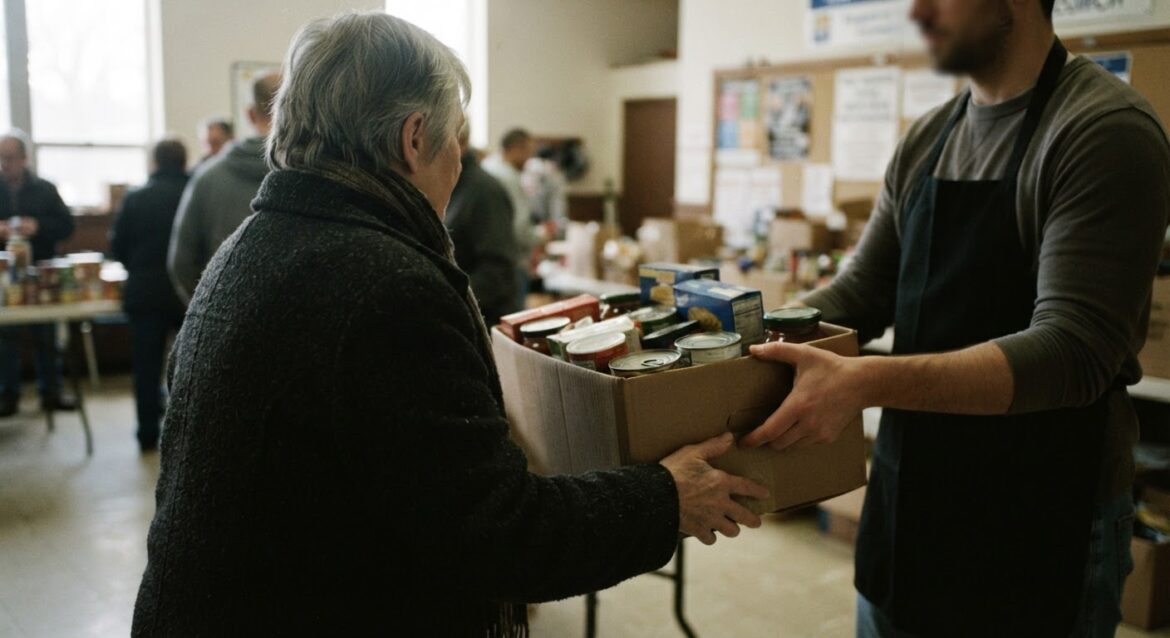
If you’re a senior on a fixed income, you already know how far a little extra food can go each month. The Commodity Supplemental Food Program, usually shortened to CSFP, is a federal program built specifically for this situation. It’s less well-known than SNAP, but for many older adults it fills a real gap—especially when SNAP benefits are modest or someone doesn’t qualify for SNAP at all.
What CSFP is and how it differs from SNAP and food pantries
CSFP is a U.S. Department of Agriculture program that provides a monthly box of food directly to income-eligible seniors. It’s not a card you swipe at the grocery store and it’s not cash assistance. Instead, once you’re enrolled, you pick up (or sometimes have delivered) a package of shelf-stable and sometimes refrigerated foods on a set schedule, typically once a month.
It’s worth understanding how this differs from other help you may have heard of:
SNAP (food stamps) gives you a benefit amount loaded onto an EBT card that you use to buy whatever groceries you choose at participating stores. CSFP, by contrast, gives you a specific, pre-packed box of foods chosen by the program—you don’t get to pick individual items, and you can’t use it like a debit card.
Food pantries and food banks are usually run by local nonprofits or charities, often with no formal eligibility rules beyond need, and the food available can vary week to week depending on donations. CSFP is a federally funded, structured program with defined eligibility criteria and a fairly consistent monthly package, distributed through specific approved agencies rather than through the informal network of pantries in your area.
Because CSFP is a separate program from SNAP, you generally can receive both at the same time if you qualify for each. They aren’t counted against each other, and getting a CSFP box doesn’t reduce your SNAP benefit. For a lot of seniors, that combination—a monthly EBT benefit plus a monthly food box—makes a meaningful difference in a household grocery budget.
Age and income eligibility rules for seniors
CSFP eligibility has two main parts: age and income.
On age, you generally need to be a certain minimum age to qualify, and that minimum is set at the state level within federal guidelines—many states use 60 as the threshold, though it’s worth confirming with your local agency since some states may set it slightly differently. If you’re unsure whether you meet the age requirement where you live, the agency running CSFP in your area can tell you quickly.
On income, CSFP uses a household income limit that is tied to federal poverty guidelines. Because these guidelines are updated periodically and can vary by household size, the specific dollar cutoff for your situation is something you’ll want to confirm directly with your local CSFP provider or state agency rather than relying on a number you saw somewhere else, since it changes and depends on how many people are in your household.
A few practical points about eligibility:
CSFP is generally intended for individuals rather than being based on the income of an entire multi-generation household in every case—but how income is counted can depend on your living situation, so it’s best to ask the local agency how they’ll evaluate your specific circumstances.
You typically don’t need to already be enrolled in another benefit program to qualify for CSFP, though if you do receive other assistance, it usually doesn’t disqualify you. The local intake process will usually ask you to self-report income and may ask for some form of documentation or verification, similar to other assistance programs.
Availability can be limited by funding and slots in a given area. Some local CSFP sites maintain a waiting list if they’ve reached their capacity for the number of seniors they’re funded to serve. If that happens where you live, it doesn’t mean you’re ineligible—it may just mean there’s a wait until a spot opens up.
What’s typically in a monthly CSFP food package
The exact contents of a CSFP box can vary somewhat by state and by what’s available through the program’s food procurement at a given time, but packages are designed to provide a mix of nutritious, shelf-stable foods that keep well and stretch across a month.
Common categories of food you might find in a package include:
Canned fruits and vegetables, canned or shelf-stable proteins such as canned meat, poultry, or fish, and sometimes peanut butter or dried beans as another protein source. Grains like rice, pasta, or cereal are common staples. Many packages also include shelf-stable milk or juice, and cheese is a frequent inclusion as well, sometimes distributed separately due to how it needs to be stored.
The package is generally intended to supplement your diet rather than serve as your only food source for the month. It’s built around foods that store well, so you’re not expected to eat everything immediately, and there’s some flexibility in how you use the items over the following weeks.
Because the specific contents can shift depending on your state and current food availability, if you want to know exactly what’s in the box before you sign up, your local distribution site can usually tell you what a recent month’s package included, giving you a realistic sense of what to expect.
How CSFP is distributed through local agencies and states
CSFP is a federal program, but it doesn’t operate through a single national office you’d contact directly. Instead, the USDA works with individual state agencies, and those states in turn work with local organizations—often food banks, community action agencies, or nonprofit groups—that handle the actual enrollment and distribution.
This layered structure explains why CSFP can look and feel a little different depending on where you live. One state might distribute boxes through a network of food bank partner sites, while another might use senior centers or local community organizations as pickup points. The rules about age and income are set at the federal level, but the day-to-day experience of enrolling and picking up your box is managed locally.
This also means that not every state or every county necessarily participates in CSFP. Availability depends on which states have opted in and which local agencies have the funding and capacity to run distribution sites. If CSFP isn’t available in your immediate area, a state agency or local food bank can often tell you whether a nearby county offers it, or point you toward other food assistance options in the meantime.
Distribution is typically monthly, and many sites ask you to pick up your box in person, though some programs have arrangements for delivery or a proxy pickup if you have mobility challenges. It’s worth asking directly about this if getting to a distribution site is difficult for you—some local programs have more flexibility here than others.
Finding a CSFP site near you and how to apply
The most reliable way to find out if CSFP is available where you live is to start with your state’s health or agriculture department, since these are commonly the agencies that administer CSFP at the state level. Many states list current CSFP distribution sites on their official websites.
Local food banks are another strong starting point. Many food banks that participate in CSFP list it clearly among their programs and can walk you through local eligibility and enrollment steps, since they’re often the ones running the distribution sites directly.
Area Agencies on Aging, which exist in most communities to help older adults access services, are also a good resource. Staff there are often familiar with CSFP and can either enroll you directly or point you to the right local contact.
When you reach out, it helps to have a general idea of your age, your household size, and a rough sense of your monthly income, since these are the details intake staff will need to determine eligibility. They can also tell you what documentation, if any, you’ll need to bring, and what the pickup schedule looks like at your local site.
If you’re not sure where to start, calling 211—a free referral line available in most areas that connects people to local health and human services—can also help you find CSFP or similar food assistance programs near you.
Applying for CSFP is usually a straightforward conversation rather than a lengthy paperwork process, and local staff are generally used to walking seniors through it step by step. If your grocery budget has been tight, it’s worth making that call to see what’s available in your area.