

What TEFAP Is and How USDA Commodities Move From Government to Local Pantries
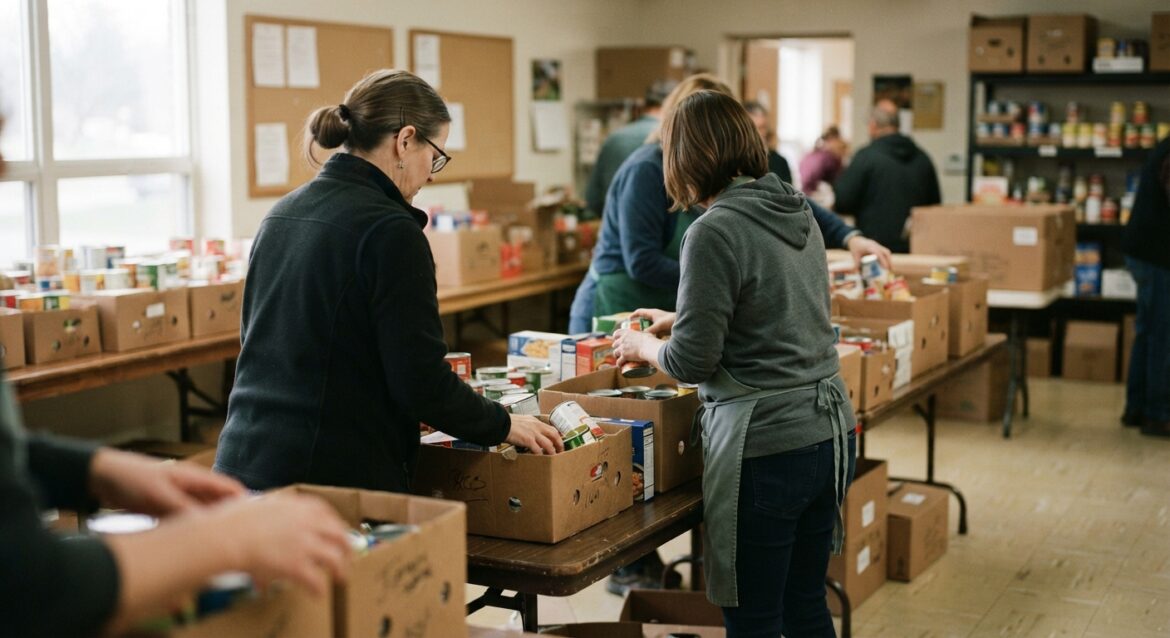
If you’ve ever picked up a box of canned vegetables, a bag of rice, or a block of cheese from a local food pantry, there’s a good chance it came through The Emergency Food Assistance Program, commonly known as TEFAP. This is a federal program run by the U.S. Department of Agriculture (USDA) that supplies free food to states, which then distribute it to food banks, pantries, and soup kitchens in their communities.
The basic idea is straightforward. The USDA purchases domestically grown and produced food—things like fruits, vegetables, meat, dairy, grains, and other staples—and ships it to state agencies. Each state then works with a network of food banks to get that food out to local pantries, shelters, and meal programs. From there, it reaches people who show up needing groceries or a hot meal.
There are two main funding pieces behind this. One covers the food itself, which the USDA buys directly from farmers and producers and sends to states as “commodities.” The other covers some of the administrative costs of storing, transporting, and distributing that food, since moving pallets of canned goods across a state isn’t free. States use this funding to keep the supply chain moving from warehouse to food bank to the pantry shelf.
It helps to think of TEFAP as the pipeline, not the faucet. The USDA sets the program up and supplies the food, but your state government decides how it’s distributed within state lines, and local food banks and pantries are the ones who actually hand it to you. That’s why the exact foods on the shelf, and how the pantry organizes distribution, can look different depending on where you live.
How TEFAP Differs From SNAP and From Privately-Run Food Banks
It’s easy to lump all food assistance together, but TEFAP works differently from other programs you may have heard of.
SNAP (the Supplemental Nutrition Assistance Program, sometimes still called food stamps) puts money on a card that you use to buy groceries yourself at a store. TEFAP, by contrast, gives you actual food items directly at a distribution site or pantry—no card, no store trip required. SNAP is also an ongoing monthly benefit tied to your income and household size, while TEFAP food is distributed in batches, often monthly or as supplies allow, and isn’t a guaranteed set amount.
TEFAP is also not the same as a privately-run food bank or pantry, even though the two are closely connected. Many food banks and pantries are independent nonprofits that raise their own donations, run food drives, and source groceries from grocery store partnerships or private donors. TEFAP commodities are just one of several sources that stock their shelves. A single pantry might have a section of USDA commodity items sitting next to donated bread, produce from a local grocery store, and canned goods from a community food drive. When you visit, you likely won’t be told “this can of beans is TEFAP and this one isn’t”—it’s all just food on the shelf, sourced from a mix of places.
This distinction matters mainly because it explains why availability can shift. A pantry’s donated food might run steady, but its TEFAP shipment depends on the federal and state pipeline, which has its own schedule and its own ups and downs.
Who Is Eligible to Receive TEFAP Food and Whether There’s an Application
Eligibility for TEFAP is generally based on income guidelines set by each state, and states have some flexibility in how they define who qualifies. In most places, if your household income falls at or below a certain percentage of the federal poverty guidelines, you’re eligible. Some states also allow you to qualify automatically if you’re already enrolled in another income-based program, since that’s often treated as proof you meet the income test.
In practice, many local pantries keep the process simple. Some ask you to fill out a short self-declaration form stating your household size and income, without requiring pay stubs or tax documents. Others may ask for a form of ID or proof of address, mainly to keep records for the food bank’s own reporting requirements. Because there’s no single national application, the paperwork—if any—will look different depending on the pantry and state you’re in.
You generally don’t need to prove you’re facing an emergency in the traditional sense of the word. Despite the word “Emergency” in the name, TEFAP is meant for anyone whose income qualifies, whether that’s due to a sudden job loss, a long stretch of low wages, retirement on a fixed income, or ongoing financial strain. If you’re unsure whether you qualify, the easiest step is to call or visit a local distribution site and ask directly. Staff there deal with these questions regularly and can tell you what’s needed on the spot.
Typical Foods Distributed Through TEFAP and How Often You Can Get Them
TEFAP food tends to lean toward shelf-stable and nutritious basics. Common items include canned fruits and vegetables, canned or dried beans, rice, pasta, cereal, peanut butter, canned meat or poultry, and cheese. Some distributions also include fresh produce, eggs, or milk, depending on what the USDA has purchased that season and what a particular state has chosen to include in its offerings.
Because USDA food purchases shift based on agricultural markets and available funding, the exact mix changes over time. One month a distribution might be heavy on canned vegetables and pasta; another month might include more dairy or protein items. This isn’t random neglect on the pantry’s part—it reflects what was available through the federal supply chain at that point.
How often you can pick up food, and how much you receive, depends entirely on the local pantry’s schedule and the state’s distribution plan. Many pantries offer TEFAP food once a month, though some community sites distribute more frequently, especially if they’re a larger regional food bank hub. There’s no fixed national rule saying you’re entitled to a certain amount at a certain frequency—it’s set locally based on what’s coming in and how many households a site serves.
How to Find a TEFAP Distribution Site or Pantry Near You
The easiest starting point is your state’s health and human services or agriculture department, since TEFAP is administered at the state level and most states list approved distribution partners on their websites. You can also search for your regional food bank—most major cities and many rural counties are served by a food bank that coordinates a network of smaller pantries, and their websites usually include a searchable directory of pantry locations, hours, and any documentation you should bring.
Calling 211, the free community services helpline available in most areas, is another reliable option if you’d rather talk to a person than search online. They can point you to the nearest pantry or distribution site and let you know what to expect when you arrive.
If you’re not sure whether a particular pantry receives TEFAP commodities specifically, it’s fine to just ask when you call. Front desk staff and volunteers usually know exactly what’s in their inventory and where it came from.
How TEFAP Funding and Food Supply Can Change Year to Year
TEFAP funding is set through federal budget decisions, and how much food the USDA purchases in a given year can rise or fall based on those decisions and on farm market conditions. In years when Congress allocates more funding, or when agricultural surpluses are high, states may receive larger shipments of commodities. In leaner years, shipments can shrink, which trickles down to smaller or less frequent distributions at your local pantry.
This is one reason TEFAP shouldn’t be thought of as a fixed, guaranteed supply, but rather as a resource that fluctuates with federal budgeting and farm production. Local food banks are generally aware of these shifts ahead of time and often adjust by seeking more donations or reallocating supplies when they know a lean period is coming.
What to Do if Your Local Pantry Runs Low on TEFAP Items
If you show up and find the shelves thinner than usual, it’s not necessarily a sign that something’s wrong with your eligibility or the pantry itself—it may simply reflect a temporary dip in the TEFAP supply chain. In these situations, a few options can help.
Ask the pantry staff when their next shipment is expected, since many receive deliveries on a predictable monthly or bimonthly cycle. You can also ask whether they have non-TEFAP food available in the meantime, since most pantries supplement commodity food with other donated items. If one location is low, staff can often point you to a nearby pantry in the same food bank network that may have more in stock that week.
It’s also worth remembering that TEFAP is just one piece of a broader safety net. If food is a recurring struggle rather than a short-term gap, it may be worth looking into SNAP eligibility as an ongoing supplement, since the two programs are designed to work alongside each other rather than replace one another.