

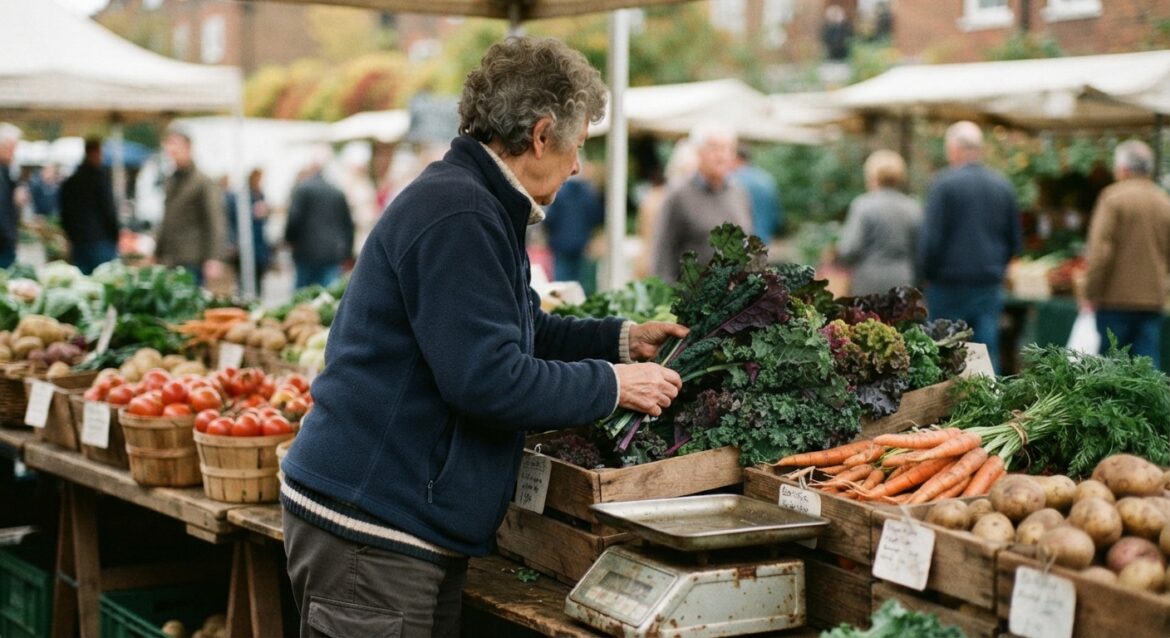
What SFMNP Is and How It Differs From CSFP and SNAP
The Senior Farmers Market Nutrition Program, usually shortened to SFMNP, is a benefit that gives eligible older adults a set amount of vouchers or checks each year to spend on fresh fruits, vegetables, and herbs at approved farmers markets, roadside stands, and sometimes community-supported agriculture programs. It’s funded federally but run at the state or tribal level, which means the exact details, timing, and dollar amount can look a little different depending on where you live.
It’s easy to mix this program up with other food assistance options, so it helps to see how it stands apart. SNAP, the Supplemental Nutrition Assistance Program, gives you a monthly benefit loaded onto a card that works at grocery stores, many farmers markets, and other retailers for a wide range of food. CSFP, the Commodity Supplemental Food Program, provides a monthly box of shelf-stable and sometimes fresh foods to income-eligible seniors, picked up at a distribution site.
SFMNP is narrower by design. The vouchers can only be used for specific fresh, unprocessed, locally grown produce, and only at farmers markets or farm stands that have signed up to accept them. You can’t use them at a regular grocery store, and you can’t use them to buy packaged, canned, or frozen items. In exchange for that narrower use, the program supports something SNAP and CSFP don’t specifically target: getting seniors fresh, seasonal food while also supporting local farmers. You can be enrolled in SNAP, CSFP, and SFMNP all at the same time. They don’t cancel each other out, and receiving one doesn’t reduce what you get from another.
Income Limits and Age Requirements for Seniors
To qualify for SFMNP, you generally need to meet two conditions: an age minimum and an income limit. Most states set the minimum age at 60, though some tribal organizations running the program set it slightly differently, so it’s worth checking locally if you’re close to that line.
The income limit is typically based on a percentage of the federal poverty guidelines, and it’s set a bit higher than some other assistance programs, since it’s meant to reach seniors who are still struggling to afford fresh produce even if their income is modest rather than extremely low. Household size matters here too—the income threshold rises as the number of people in your household increases. Because the exact percentage and dollar figures are adjusted periodically and can vary by state, the most reliable way to know where you stand is to contact your local Area Agency on Aging or your state’s Department of Agriculture, since either one commonly administers the program.
Some states ask you to self-declare your income on a simple form, without requiring pay stubs or tax returns, while others may ask for documentation. If you’re already enrolled in a program like SNAP, Medicaid, or SSI, some states will let that enrollment serve as proof that you meet the income requirement, which can simplify things considerably. It’s worth asking directly whether your existing benefits already qualify you, since this can save you from filling out extra paperwork.
How Vouchers Are Distributed and Where They Can Be Used
Once you’re approved, you’ll typically receive a booklet or set of individual checks or vouchers, each with a fixed dollar value, distributed once a year rather than monthly. The total amount for the year is usually a modest sum, enough to make a meaningful dent in a produce budget over the season but not intended to replace a grocery budget entirely.
These vouchers work almost like cash, but only within a specific system. You take them to a farmers market, farm stand, or CSA program that has been authorized by your state to accept SFMNP checks. Look for a sign at the market or ask the market manager which vendors take them, since not every vendor at every market may be signed up. When you shop, you can only purchase fresh fruits, vegetables, and cut herbs that were grown in the United States, and in most states, grown within the state or a defined regional area. That local-growing requirement is central to the program, so items like tropical fruits that couldn’t have been grown locally, or processed products like jams, dried fruit, or baked goods, typically aren’t allowed even if a farmer is selling them at the same stand.
Farmers and market vendors who accept these vouchers have gone through their own approval process with the state, so if you’re unsure whether a vendor takes SFMNP, it’s always fine to ask before you start picking out produce. Most markets that participate will post signage or include information in their weekly newsletters or social media pages during the season.
The Seasonal Nature of the Benefit and How to Plan Around It
One of the most important things to understand about SFMNP is that it isn’t a year-round benefit like SNAP. It runs on a farmers market season, which generally means it’s active sometime between late spring or early summer and lasts through early fall, though the exact start and end dates depend on the growing season in your region and are set by your state administering agency.
Because the vouchers are typically issued all at once at the start of the season, it helps to think ahead about how you want to spend them rather than using them all in your first market visit. Vouchers usually come in fixed denominations, such as several checks worth a set amount each, and they generally cannot be redeemed for cash or change back if your purchase is for less than the check’s value—so many shoppers plan their trips to buy amounts that use the full value of each check.
Vouchers also expire, usually at the end of the same calendar year they’re issued, even if the farmers market season technically continues a little longer in your area. If you receive your vouchers in the summer, don’t assume you can save them for the following spring. Once the deadline passes, unused vouchers typically cannot be redeemed, exchanged, or rolled over. If your schedule is unpredictable, it can help to make a rough calendar note of when your market season winds down and try to use any remaining vouchers before the last few weeks, since some markets close entirely for winter and you don’t want to be left holding checks with nowhere to spend them.
How to Find Participating Farmers Markets and Sign-Up Locations Near You
Because SFMNP is administered at the state or tribal level, the best starting point is your state’s Department of Agriculture or Department of Health, either of which commonly oversees the program and can tell you whether it’s currently active in your area, since not every state participates every year. Your local Area Agency on Aging is another strong resource, since these agencies often handle applications directly or can point you to the organization that does, and they’re generally familiar with senior nutrition programs beyond just this one.
Senior centers, community centers, and local health departments frequently post sign-up information seasonally, especially as spring approaches and states prepare to distribute that year’s vouchers. If you attend a senior meal site or receive home-delivered meals, ask the staff there too, since these programs often share information about SFMNP enrollment windows.
Once you’re enrolled, ask specifically for a list of markets and vendors near you that accept the vouchers, since not every farmers market in your state will necessarily participate. Some markets maintain their own printed or online vendor lists that make it easy to see who accepts SFMNP before you go. If you don’t see a familiar local market on the list, it doesn’t necessarily mean it’s excluded permanently—it may just not have completed the vendor approval process yet, and asking the market manager directly is a reasonable next step if you’d like to shop there.
Finally, keep in mind that enrollment is often limited by available funding each year, and some areas have waiting lists or first-come, first-served enrollment periods. If you’re interested, it’s worth reaching out early in the season rather than waiting, since funding for a given year’s vouchers can run out before everyone who’s eligible gets a chance to sign up.