

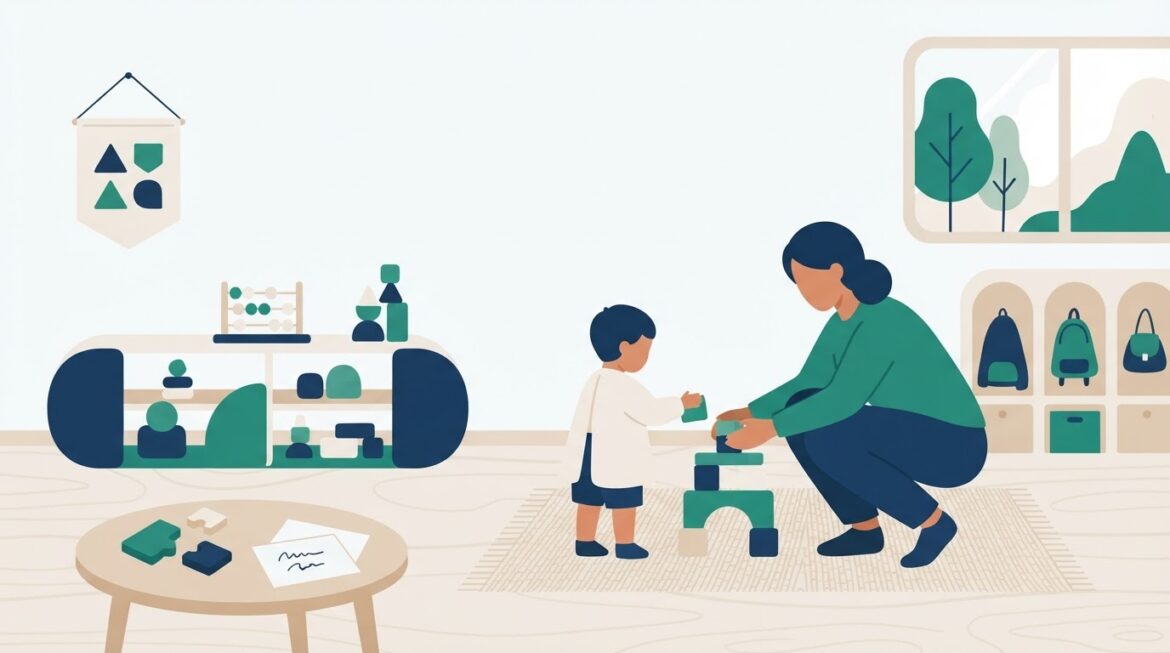
What Head Start and Early Head Start actually provide
Head Start is a federally funded program that provides free early learning, health, and family support services to children from low-income households. Early Head Start serves infants, toddlers, and pregnant women, while Head Start serves children roughly ages 3 to 5, until they enter kindergarten. Together, the two programs cover the full span from before birth through the preschool years.
These are not just “daycare” in the everyday sense. Programs are required to offer a structured early learning curriculum designed to build language, early literacy, math, and social-emotional skills. On top of that, most Head Start programs also provide:
Health and developmental screenings, including vision, hearing, and dental checks, along with referrals for follow-up care when a concern is found. Nutritious meals and snacks served during program hours, planned around each child’s dietary needs. Support for children with disabilities, including help getting an evaluation and connecting to special education services if needed. Family support services such as help finding housing, employment resources, or connections to other public benefits. Parent involvement opportunities, since Head Start is built around the idea that parents are a child’s first teachers, and many programs invite parents to volunteer, sit on advisory committees, or take part in workshops.
Because Head Start is funded through grants to local organizations, school districts, nonprofits, and tribal or migrant-serving agencies, the exact mix of services can look a little different from one location to the next. Some programs run full school days, others run part-day or part-year, and some offer home-based options where a staff member visits the family regularly instead of the child attending a center.
Income eligibility and priority categories (foster care, homelessness, disability)
Head Start is primarily aimed at families with income at or below the federal poverty guidelines, though the rules allow some flexibility. A portion of enrollment slots, generally a small percentage, can go to children from families slightly above the income cutoff if a program determines there’s a good reason to include them.
Certain children are automatically eligible for Head Start regardless of household income, because federal rules give priority to specific circumstances, including:
Children in foster care. Children experiencing homelessness, including those living in shelters, motels, cars, or doubled up with other families. Children from families receiving certain public assistance, such as SSI or cash assistance through a state’s TANF program. Children with disabilities, since Head Start programs are required to reserve a portion of their enrollment for children who have an identified disability.
If your household fits any of these categories, it’s worth applying even if you’re not sure your income would otherwise qualify. Local programs are used to working with families in unstable housing situations or going through a foster care placement, and staff can usually walk you through what documentation is realistic to provide given your circumstances.
Income documentation typically includes recent pay stubs, a tax return, or a benefits award letter. If you don’t have these on hand, ask the program directly. Many are flexible about what counts as proof, especially for families dealing with a recent job loss or an unstable living situation.
How this differs from CCDF child care subsidies
People often confuse Head Start with a child care subsidy, but the two work quite differently, and understanding the distinction can help you figure out which one fits your situation, or whether you need both.
A child care subsidy, usually run through a state’s Child Care and Development Fund (CCDF), is designed primarily to help parents pay for child care so they can work, look for work, or attend school or training. The subsidy typically pays a provider directly or reimburses part of the cost, and parents can generally choose from a range of licensed providers, including center-based care, family child care homes, and in some cases relatives.
Head Start, on the other hand, is a direct-service education and family support program. There isn’t a “voucher” you take somewhere; instead, you enroll your child directly into a specific local Head Start program, and that program provides the education, meals, health screenings, and family services itself. Eligibility for Head Start is based on income and priority categories rather than on a parent’s work or school schedule, which means a parent doesn’t need to be employed to qualify.
Hours can also differ. Many Head Start programs run on a school-day or school-year schedule, which may not cover a full workday or a full calendar year. Because of this, some families use Head Start for their child’s early education needs and separately arrange child care, sometimes through a CCDF subsidy, to cover the additional hours a work schedule requires. Some Head Start programs have also formed partnerships with child care centers to offer extended hours, so it’s worth asking a local program directly whether that option exists in your area.
Neither program is “better” across the board. They’re built for different purposes, and depending on your family’s schedule and needs, you may end up applying to one, the other, or both.
What a typical day and services look like
While the specifics vary by location, a typical day in a center-based Head Start program often includes structured learning activities, such as group time, reading, and early math games, along with free play, outdoor time, and at least one meal and a snack. Staff track each child’s development over time and share updates with parents through conferences, notes, or informal conversations at pickup and drop-off.
Health services are a routine part of the program, not an occasional add-on. Programs are required to help arrange screenings and check that children are up to date on required health and dental visits, and to follow up if a child needs further care. If a family doesn’t have a regular source of health care, Head Start staff can often help connect them to one.
Family services staff typically check in periodically to see if the household needs help with things like housing stability, food assistance, or employment resources, and can refer families to other local or state programs. For home-based Early Head Start options, a staff member visits regularly, usually weekly, to work directly with the parent and child together, combining education with coaching on child development topics.
How to find and apply to a local program
Because Head Start programs are run locally, the best way to find one is to search for Head Start providers in your city or county, or contact your state’s Head Start association, which typically keeps a directory of local grantees. Many public libraries, school district offices, and local Departments of Health and Human Services also keep referral information on hand.
When you contact a program, be ready to provide basic information about your household size, income, and the age of your child, along with documentation such as your child’s birth certificate, proof of income, and proof of address. If your child has a disability or your family is currently experiencing homelessness or involved with the foster care system, mention this early in the conversation, since it may affect both eligibility and priority for a spot.
Applications are typically accepted on a rolling basis throughout the year, not just at the start of a school year, since openings can come up whenever a child leaves or a program has additional capacity. It doesn’t hurt to apply even mid-year.
Waitlists and what to do while you wait
Demand for Head Start slots often exceeds the number of funded spaces in a given area, so waitlists are common, especially for Early Head Start’s infant and toddler slots. If you’re placed on a waitlist, ask the program how it prioritizes openings, since many use the same priority categories described earlier, meaning your position could improve if your family’s circumstances change.
While you wait, it’s worth checking whether your state runs other early learning options, such as a state-funded pre-K program, which sometimes has different eligibility rules and separate availability. You can also ask the Head Start program directly about part-time or home-based options, which sometimes have shorter waits than full-day center slots.
Staying in touch with the program periodically, rather than assuming you’ll be contacted automatically, can help make sure your application stays current and that you don’t lose your place due to outdated contact information. If your income or household situation changes while you’re waiting, let the program know, since it could shift your priority status for an opening.