
What LIHWAP Covers and How It’s Different From LIHEAP
Most people have heard of help paying the heating bill. Fewer know that a similar program exists for water and sewer service. The Low Income Household Water Assistance Program, usually shortened to LIHWAP, was created to help households pay for drinking water and wastewater (sewer) services when income is too tight to keep up with the bill.
LIHWAP is often confused with LIHEAP, the Low Income Home Energy Assistance Program, because the two share a similar structure and are sometimes run by the same state office. The key difference is what each program pays for. LIHEAP is meant for energy costs like electricity, natural gas, propane, or oil used for heating and cooling a home. LIHWAP is meant specifically for water and wastewater services — the bill from your local water utility or municipal sewer authority, not your gas or electric company.
Depending on your state, LIHWAP funds might be used to pay down a past-due balance, cover a portion of an upcoming bill, or in some cases help reconnect water service that has already been shut off. Some states also use a portion of the funding for water-related equipment repairs, though not every state offers that option. Because the program is administered differently from one state to another, what’s available to you depends heavily on where you live.
It’s worth knowing that LIHWAP funding has, in the past, been distributed in limited rounds rather than offered continuously year-round. That means availability can shift depending on how much funding a state has received and how quickly it’s been used. If you don’t see an open application in your area right now, it doesn’t necessarily mean the program is gone for good — it may simply be between funding cycles.
Who Typically Qualifies Based on Income and Household Size
Eligibility rules are set at the state level, so there isn’t one universal income cutoff that applies everywhere. That said, most states use a similar general approach: they look at your household’s gross income relative to household size, often measured against the federal poverty guidelines or the state’s median income, and they may also consider whether anyone in the household already receives certain other forms of public assistance.
In many states, if your household already qualifies for programs like SNAP (food assistance), TANF, SSI, or LIHEAP, you may automatically meet the income requirement for LIHWAP as well, since these programs tend to use overlapping income tests. This is sometimes called “categorical eligibility,” and it can simplify the application process because you may not need to submit as much additional income documentation.
Household size matters because the income limit rises as the number of people in the home increases. A single person and a family of five are held to different income thresholds, even in the same state. Some states also give priority to households with young children, older adults, or a member with a disability, particularly when funding is limited and applications outpace available money.
Because the specific dollar thresholds change depending on the state and the funding cycle, the most reliable way to know whether your household qualifies is to check with your state’s program administrator directly rather than relying on a number you saw somewhere else. Income limits are also typically updated periodically, so a figure that was accurate last year may not be accurate now.
How to Find Your State or Local Water Assistance Provider
LIHWAP is a federally funded program, but it’s administered locally, which means the application isn’t handled through a single national website. Instead, each state designates an agency to run the program — often the same state department that manages LIHEAP or other public assistance programs, such as a department of human services, community action agency network, or a division of social services.
A good starting point is to search for your state name plus “LIHWAP” or “water assistance program.” Many states also route LIHWAP applications through local community action agencies, which are nonprofit or quasi-governmental organizations that manage several assistance programs in a given county or region. If your area already has a community action agency you’ve worked with for heating assistance, rent help, or weatherization programs, that same office may also handle LIHWAP applications or be able to point you to whoever does.
Your water utility itself can also be a useful resource, even if it doesn’t run the program. Many water and sewer providers keep a list of local, state, and charitable assistance options they refer customers to when a bill is past due, and some utilities have their own hardship or payment plan options that work alongside — or instead of — LIHWAP.
If you’re not sure where to start, calling 211, the free national referral line used in most states, can help connect you with the correct local office. Staff there are typically familiar with which agency in your area handles water assistance funds and can tell you whether applications are currently open.
Documents Usually Needed to Apply
While exact requirements vary by state, most LIHWAP applications ask for a similar core set of documents. Having these ready before you apply can save you a return trip or a delay in processing.
Proof of identity is standard, usually a driver’s license, state ID, or other government-issued identification for the person applying. You’ll also likely need to show proof of address, which can often be satisfied with the water bill itself, since it usually lists the service address and account holder.
Income documentation is typically the most involved part of the application. This might include recent pay stubs, a benefits award letter for Social Security, disability, or unemployment income, a copy of a recent tax return, or documentation showing you already receive another qualifying assistance program. If your household includes multiple people with separate incomes, you may need to provide documentation for each person, not just the applicant.
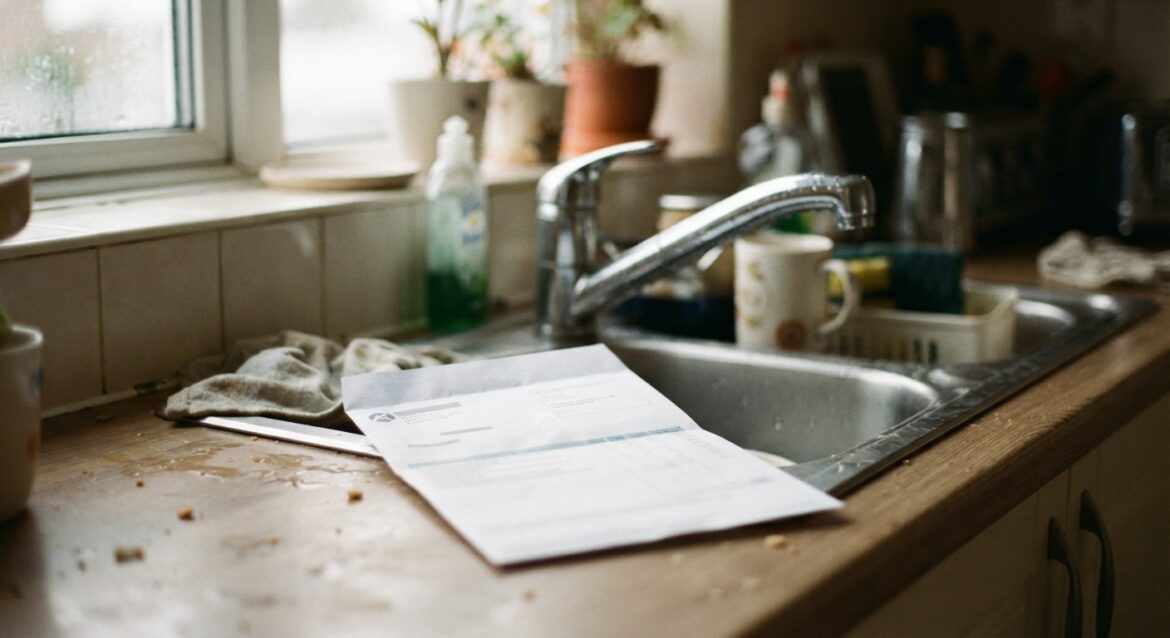
You’ll also need the actual water and/or wastewater bill, ideally a recent one showing the account number, the utility provider’s name, and the balance owed. If you’re applying because service is at risk of being shut off, a shutoff notice can sometimes help move an application along faster, since many programs prioritize households facing imminent disconnection.
Finally, be prepared to provide basic household information, such as the names and dates of birth of everyone living in the home, since household size directly affects the income limit used to determine eligibility.
What to Do If Your Provider Doesn’t Participate in LIHWAP
Not every water or sewer utility is set up to receive LIHWAP funds directly, and in some states, the program may not currently be accepting new applications at all due to funding limits. If that’s the situation you’re facing, you still have a few paths worth exploring before assuming there’s no help available.
Start by asking your utility directly whether it offers its own bill assistance, payment plan, or hardship program. Some municipal water departments maintain their own discount or forgiveness programs funded locally rather than through LIHWAP, and these are sometimes less well known simply because they aren’t advertised as heavily.
Community action agencies and local charitable organizations, including some faith-based groups and community foundations, sometimes offer emergency utility assistance funds that aren’t tied to LIHWAP eligibility rules. These funds are usually limited and may require documentation similar to what LIHWAP asks for, but they can be worth a call, especially if you’re facing an immediate shutoff.
It’s also reasonable to ask your utility whether it can pause a disconnection while you pursue assistance, or whether it offers a payment arrangement that spreads a past-due balance over several months. Utilities generally have some flexibility here, and many would rather work out a plan than go through a disconnection and reconnection process.
If LIHWAP funding in your state is simply exhausted for the current cycle, ask when the next funding round is expected to open, and ask to be notified or placed on any waiting list the local administering agency keeps. Programs like this are renewed periodically, so a “not available right now” answer today doesn’t mean the door is closed for good.