

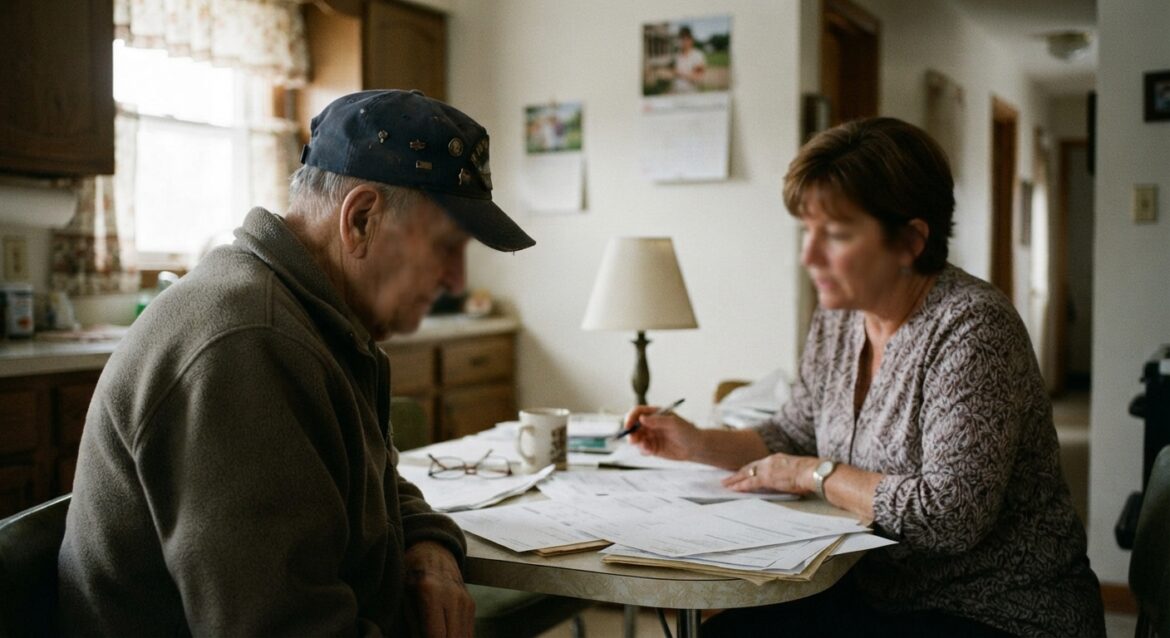
What Aid & Attendance is and how it differs from standard VA disability compensation
Aid & Attendance is not a stand-alone benefit. It’s an increased monthly payment added on top of a VA pension for wartime veterans (or their surviving spouses) who have limited income and need help with everyday activities. Because it’s tied to the pension program rather than to disability compensation, it works differently from the benefits most people associate with the VA.
Standard VA disability compensation is paid based on a service-connected condition and a disability rating, regardless of your income. The VA pension, by contrast, is a needs-based benefit for wartime veterans who meet certain age or disability criteria and who have limited income and assets. Aid & Attendance is an enhancement to that pension, added when a veteran or surviving spouse needs regular help with things like bathing, dressing, eating, or moving safely around the home, or when they’re housebound or living in a nursing facility.
In practical terms, this means a veteran can receive both service-connected disability compensation and, if they separately qualify for pension, an Aid & Attendance benefit. It also means someone with no service-connected disability at all can still qualify for Aid & Attendance through the pension pathway, as long as they meet the wartime service, income, and care requirements described below. The extra monthly amount is meant to offset the cost of in-home care, assisted living, or nursing home care, but it isn’t restricted to any single use — it’s paid directly to the veteran or surviving spouse as part of their monthly pension check.
Who qualifies: wartime service, income and asset limits, and care needs required
Eligibility for Aid & Attendance has two layers: first you need to qualify for the underlying VA pension, and then you need to show a level of care need that meets the VA’s definition for the add-on.
For the pension itself, the veteran generally needs to have served on active duty during a recognized wartime period, been discharged under conditions other than dishonorable, and meet age or disability thresholds (typically age 65 or older, or permanently and totally disabled at any age). Surviving spouses of veterans who met these service requirements may also qualify for a pension in their own right, often called a survivor’s pension, and can then apply for Aid & Attendance on top of it.
The pension is also income- and asset-limited. The VA looks at your countable income (after subtracting unreimbursed medical expenses, including the cost of paid caregivers or facility care) and compares it to an annual limit set by the VA that varies depending on whether you’re a veteran, a surviving spouse, and how many dependents you have. There’s also a net worth limit that combines your assets and income, meant to ensure the benefit goes to those with more modest financial resources. Because unreimbursed medical and care expenses can be subtracted from income, many applicants who look “over the limit” on paper actually qualify once ongoing care costs are factored in.
On top of meeting the pension’s financial rules, you need to demonstrate a qualifying level of care need. The VA recognizes several situations: needing help from another person to perform basic daily activities like bathing, feeding, dressing, or using the bathroom; being bedridden due to illness; being a patient in a nursing home due to physical or mental incapacity; or being substantially confined to your home or immediate premises because of a disability, with little likelihood of that improving. You don’t need to meet all of these — meeting any one of them can support a claim, as long as it’s documented properly.
Documents needed, including a physician’s statement of functional limitations
Because Aid & Attendance depends on both financial eligibility and medical need, the application file tends to be more document-heavy than a standard pension claim. Having things organized before you submit can meaningfully shorten the process.
On the service side, you’ll typically need the veteran’s discharge paperwork (often referred to as a DD214 or the equivalent for the era of service) showing dates of service and discharge status. If a surviving spouse is applying, marriage certificates and, if applicable, the veteran’s death certificate are usually required to establish the relationship.
On the financial side, expect to provide documentation of income from all sources — Social Security, pensions, retirement accounts, wages — along with records of recurring unreimbursed medical expenses. This is where receipts or statements for in-home care, assisted living fees, prescription costs, and health insurance premiums matter, since these expenses can lower your countable income and help you qualify.
The centerpiece of the medical documentation is a statement from a physician (the VA has a specific examination form for this purpose) describing the applicant’s functional limitations in plain clinical terms: what they can and can’t do independently, whether they need assistance with specific daily activities, whether they’re bedridden, and their overall prognosis. A vague note saying someone “needs help at home” is far less useful than a detailed description tied to specific activities of daily living. If the applicant is in a nursing home, a statement from the facility about the level of care provided can serve a similar purpose.
It’s worth asking the treating physician directly whether they’re familiar with this VA form, since a doctor who understands what the VA is looking for can often complete it more precisely on the first attempt, avoiding delays caused by requests for additional information later.
How the application process works and typical wait times
Applications for pension with Aid & Attendance can be filed directly with the VA, often starting with an intent to file, which can preserve an earlier effective date while you gather supporting documents. The formal application then includes the pension claim form along with the medical and financial evidence described above.
Some applicants choose to work with an accredited veterans service officer, often available through state veterans’ affairs offices or veterans’ service organizations, to help assemble the paperwork and make sure nothing is missing. These services are typically free, and having someone familiar with the VA’s specific documentation preferences can reduce back-and-forth.
Processing times vary depending on the completeness of the initial submission and the VA’s current workload, and they can shift over time, so it’s reasonable to expect the process to take several months rather than a few weeks. Claims that arrive with clear, complete medical and financial documentation generally move faster than those where the VA has to request missing information, which restarts part of the clock. If approved, benefits are often paid retroactively to the effective date established by the intent to file or the original claim date, so a longer wait doesn’t necessarily mean lost money — but it does mean it’s worth checking in periodically on the claim’s status rather than assuming no news is bad news.
If a claim is denied, there is a formal process for requesting a review or appealing the decision, and additional medical evidence can often be submitted to address the specific reasons cited in the denial.
How this benefit interacts with Medicaid and other income-based aid
Because Aid & Attendance is designed to help cover the cost of care, it can affect eligibility for other income-based programs, and it’s worth understanding the connection before assuming the benefit is simply “extra” money with no ripple effects.
Medicaid, which many people rely on for long-term care coverage, has its own separate income and asset rules that differ from the VA’s. In some cases, VA pension income — including the Aid & Attendance portion — counts toward Medicaid’s income limits, which can be relevant if someone is trying to qualify for or maintain Medicaid-covered nursing home or home care services. Rules here vary by state and by which Medicaid pathway someone is using, so it’s not something to assume works the same way everywhere.
Other income-based programs, like SNAP or certain low-income housing assistance, may also count VA pension income when determining eligibility, though many programs allow deductions for medical expenses that can offset some of that impact. Because the interactions between VA pension income and other benefit programs can be intricate and depend on individual circumstances, it’s generally a good idea to talk through your specific situation with a benefits counselor, a state Medicaid caseworker, or an accredited veterans service officer before finalizing care decisions, rather than assuming one benefit will simply stack cleanly on top of another.
The bottom line is that Aid & Attendance can provide meaningful monthly support for veterans and surviving spouses who need help with daily life, but it works within a broader system of income-based programs. Understanding how the pieces fit together — rather than treating each benefit in isolation — makes it easier to plan for care costs without unexpected surprises down the line.